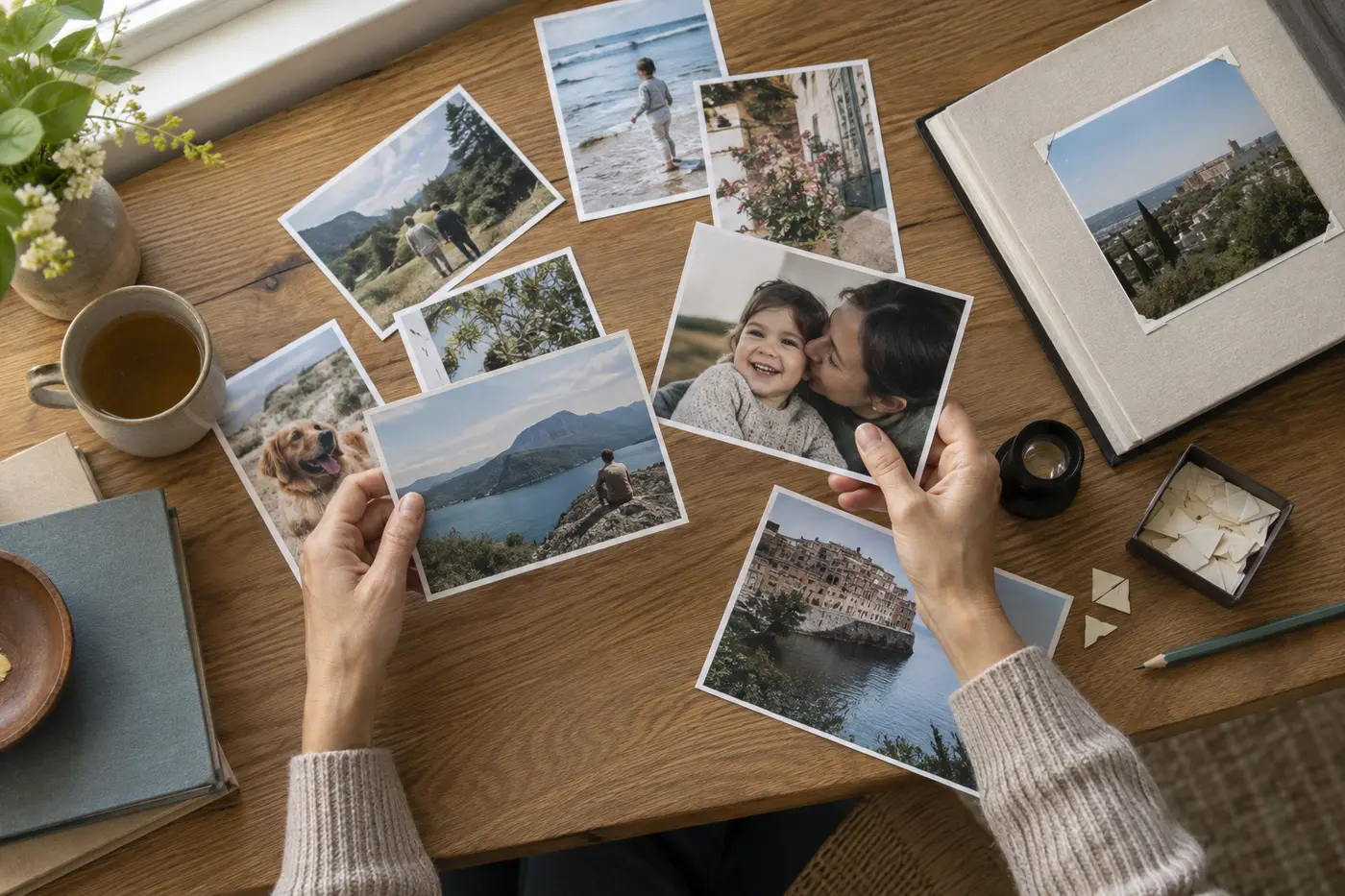
A personalized gift works when it says, “I noticed.” The name, date or photograph may be visible, but the deeper personalization is the choice behind it: remembering the recipient’s favorite Saturday ritual, the phrase that always makes them laugh, or the small corner of their home they have been meaning to finish.
That is why the best custom gifts rarely begin with a product search. They begin with a person. Before comparing fonts, colors or materials, think about how the recipient lives. What do they wear repeatedly? Which stories do they retell? What object would make an ordinary day warmer, easier or more distinctly theirs?
This guide offers a calm method for answering those questions. It covers personal meaning, practical fit, design restraint, ordering timelines and the moment of presentation. The goal is not to buy the most elaborate item. It is to choose one detail well.
Start with meaning, not merchandise
Open a blank note and write three things: a shared memory, an everyday habit and a future plan. These prompts create a more useful gift brief than a long catalog ever could.
A shared memory might be a first road trip, an imperfect wedding dance, a family recipe or the neighborhood where someone grew up. An everyday habit could be morning coffee, weekend gardening, walking the dog or keeping a meticulously organized desk. A future plan might be a new home, a planned vacation, retirement or simply more dinners together.
Now look for the overlap between story and use. A framed map may preserve the location of a memory while filling a bare hallway. A customized mug can nod to a private joke and become part of a morning routine. Matching apparel can celebrate a relationship while giving two people something relaxed enough to wear beyond a single photo.
Personalization should reveal that you paid attention. It should not make the object harder to enjoy.
One strong detail is often enough. Initials on a travel pouch, a meaningful date below a small illustration or a short line from a family saying can feel more confident than a design crowded with names, dates, photos and decorative icons.
Use the three-layer gift test
A successful personalized gift has three layers: emotional relevance, practical relevance and aesthetic fit. If an idea satisfies all three, it is likely to feel natural rather than performative.
1. Emotional relevance
Ask what the detail means to the recipient—not only to you. A reference to a shared joke may be perfect for a partner or sibling, while a milestone date may suit parents celebrating an anniversary. If the recipient would need an explanation before the gift makes sense, reconsider the reference.
2. Practical relevance
Think about where the item will live and how often it can be used. Someone who travels lightly may value a compact engraved tag more than a large keepsake. A person with limited wall space may prefer a small tabletop print. A devoted homebody might appreciate a textile, mug or piece of art that becomes part of the room.
3. Aesthetic fit
Look at the recipient’s existing choices. Do they wear clean neutrals, saturated colors or vintage graphics? Is their home warm and layered, quiet and minimal, or bright and playful? Personalization is not a license to ignore taste. Choose colors and typography that already belong in their world.
Match the gift to the relationship
The same level of personalization does not suit every connection. A romantic partner may welcome an intimate reference. A colleague may prefer a light detail connected to a hobby or professional milestone. Good judgment is part of good design.
For a partner
Shared symbols work well: a location, lyric-length original phrase, date, nickname or paired design. Clothing is especially effective when the style reflects how the couple actually dresses. For ideas that coordinate without feeling costume-like, browse matching couple shirts and personalized couple gifts and focus on wearable colors, comfortable fits and a concept both people would choose.
The emotional hook should come from the pair’s real story. A subtle design based on a first trip may last longer than an overly literal romantic slogan. If you are uncertain about sizing, a mug or another shared-use object may be safer than fitted apparel.
For family
Family gifts become richer when they preserve a detail that might otherwise disappear: handwriting from a recipe card, the outline of a childhood home, a small family saying or a collection of significant locations. Avoid listing every fact merely because the product allows it. Edit the story to its most recognizable element.
When several relatives contribute, assign one person to check spelling and dates. Names with accents, wedding dates and geographic coordinates deserve a second review before the order is submitted.
For a friend
Friendship gifts can be specific without being formal. Start with the rituals that hold the friendship together: a monthly movie night, a running route, thrift-store weekends or long-distance voice notes. The item can be modest. Precision matters more than price.
For a new home
A housewarming gift should respect both the person and the room. Custom art is useful because it can translate a photograph, location or shared value into something designed for display. When exploring personalized wall art and custom prints, consider the available wall, the frame color, surrounding furniture and whether a portrait, map or text-led piece best suits the space.
Do not guess at a very large size. A medium print is easier to place, and an unframed option can give the recipient control if their décor is still evolving.
Personalize with restraint
Customization tools can tempt a buyer to fill every available field. Strong design usually comes from hierarchy: one main element, one supporting detail and enough empty space for both to breathe.
Choose a clear focal point
Decide what should be noticed first. For a photo gift, that is probably the image. For a typographic print, it may be a name or short phrase. Supporting details—such as a date or location—should remain visually quieter.
Use photographs that can reproduce well
Choose the original file rather than a screenshot or an image downloaded from social media. Look for even light, visible faces and enough space around the subject for cropping. A technically imperfect but emotionally resonant image can work, but extreme darkness and heavy compression are difficult to rescue in print.
If several people appear in the photograph, inspect it at small size. Faces that are clear on a phone screen may become indistinct after a wide crop. For illustrated portraits, submit more than one reference if the seller permits it.
Keep text short and verified
Read personalized text aloud, then ask another person to check it. Confirm spelling, capitalization, punctuation and number order. Dates are particularly easy to reverse when a seller uses a different regional format. Writing the month as a word removes ambiguity.
Do not use copyrighted lyrics, characters or logos unless the seller clearly offers licensed designs. Your own short phrase, an original family expression or a simple date is both safer and more personal.
Select colors the recipient already uses
When uncertain, borrow a color from the recipient’s wardrobe or home. Deep green, navy, clay, cream and charcoal tend to integrate easily, but there is no universal “safe” palette. A maximalist recipient may be delighted by electric color; a minimalist may value a quiet tonal design.
Check quality before you order
Personalized products may have different return rules because they cannot always be resold. Before purchasing, read the production estimate, shipping window, proofing process, material description, care guidance and correction policy.
The FTC’s online shopping guidance recommends checking sellers and products, understanding the full cost, reading delivery and refund terms, and keeping order records. These habits matter even more when an item is custom-made and tied to a fixed celebration date.
- Confirm that the product dimensions suit its intended place or wearer.
- Check whether production time is separate from shipping time.
- Review the exact spelling, date format, photo crop and color selection.
- Save the order confirmation, customization notes and any approved proof.
- Read care instructions before choosing fabric, print or engraving options.
- Allow a buffer for handmade production, carrier delays or corrections.
Understand previews and proofs
An instant preview is helpful but may not show the precise scale or color of the finished object. A human-reviewed proof offers another opportunity to check alignment, cropping and text. If a proof is offered, respond quickly so the order does not lose its place in production.
Order for the real deadline
Work backward from the day you need to have the gift in hand, not the day of the event. Add time for wrapping and for inspecting the item. For a wedding, trip or professional milestone, build in a larger buffer because replacing a flawed custom item may require another full production cycle.
Make presentation part of the story
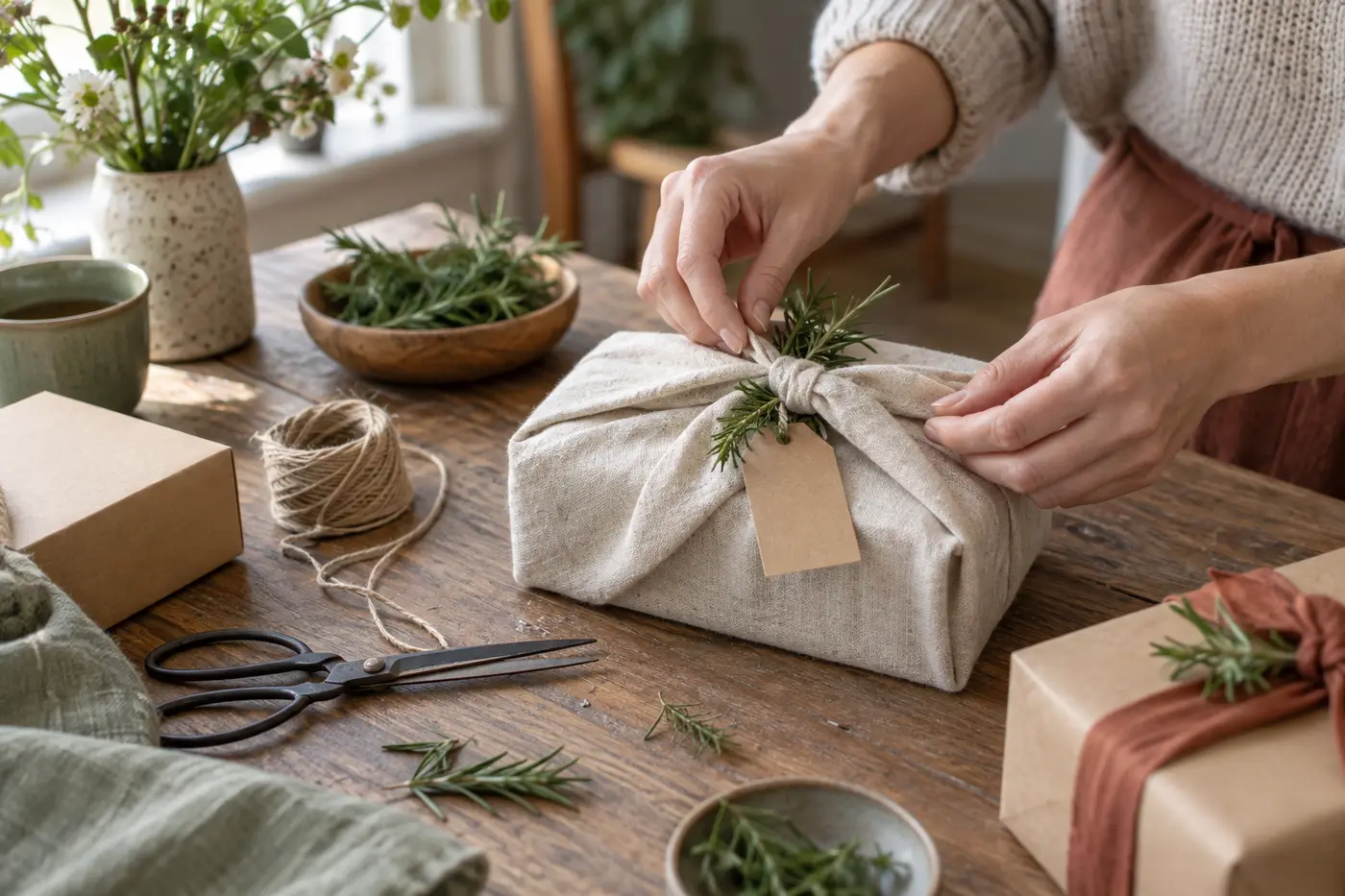
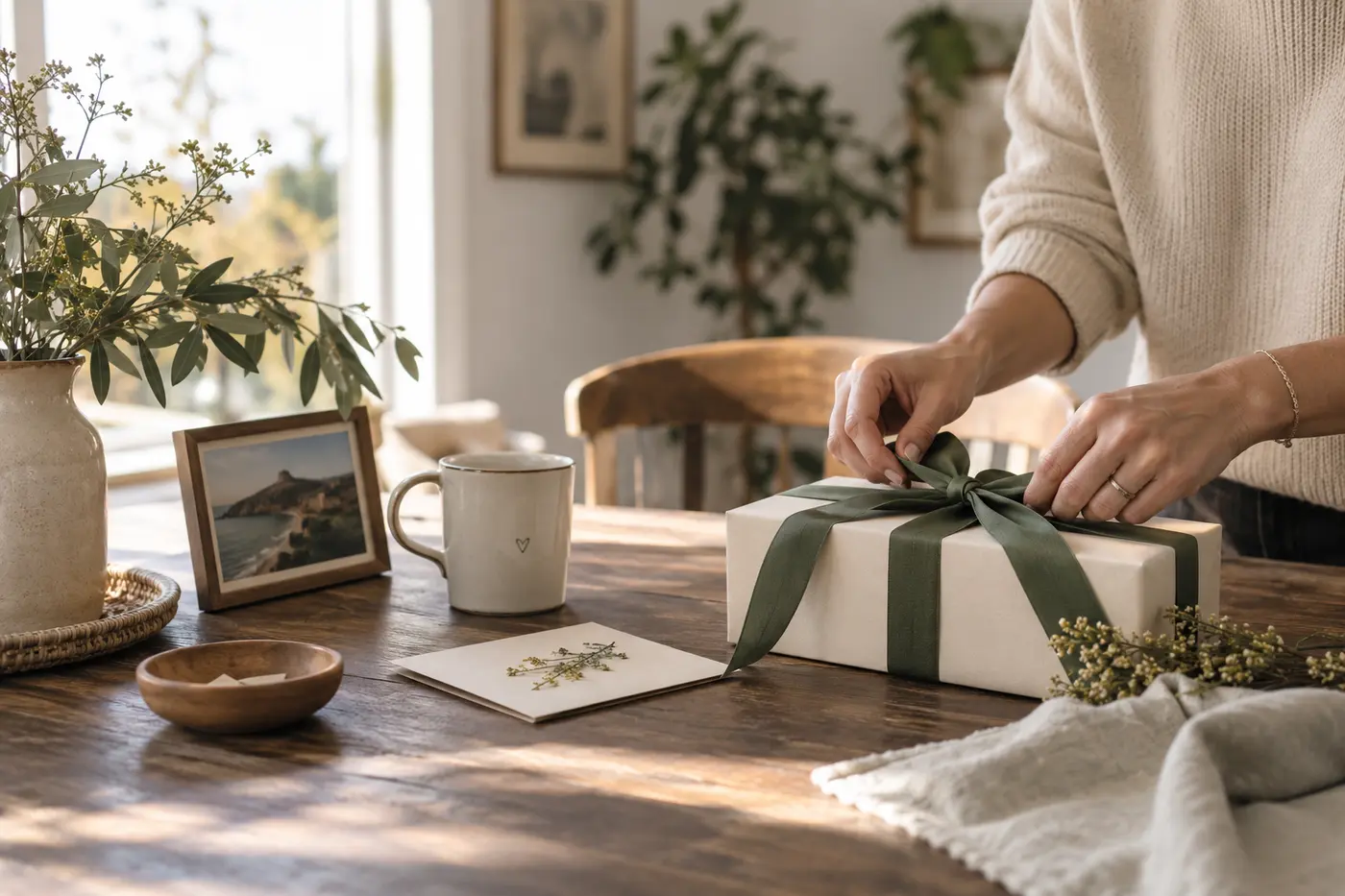
A personalized gift does not require elaborate wrapping, but the reveal should support the meaning. Use a reusable box, cloth wrap or plain paper with one well-chosen ribbon. If the item contains a subtle reference, a short handwritten note can provide context without overexplaining it.
Write why you chose the detail. “This is the view from our first hike” is more affecting than “I hope you like it.” The note connects the physical object to the memory and gives the recipient a second keepsake.
For wall art, consider presenting a small paper template showing the dimensions. For coordinated apparel, place both pieces together so the paired concept is clear. For a gift sent directly, ask the seller whether prices are removed and whether a message can be included.
Common mistakes that make a custom gift feel generic
Choosing the category before the person
“Personalized gift for women” or “gift for men” is too broad to guide a meaningful choice. Start with the person’s routines, taste and relationship to you. Demographics can narrow a catalog; they cannot replace observation.
Making the giver the main character
A shared memory should still appeal to the recipient. If the design centers your taste, your favorite photograph and your preferred colors, it may feel like a gift for yourself. Ask which version the other person would display or wear.
Confusing more detail with more meaning
Adding every name, date and symbol can dilute the strongest idea. Edit until the message is readable at a glance. Thoughtful restraint tends to age better than novelty overload.
Ignoring daily reality
A beautiful object can still be impractical. Check washing needs, breakability, storage, wall space and workplace appropriateness. A gift becomes meaningful through use, not merely through customization.
A simple decision framework
If you are comparing several ideas, score each from one to five for personal meaning, usefulness, visual fit, ordering confidence and presentation potential. Do not automatically choose the highest total. Use the scores to see where an exciting idea has a hidden weakness.
For example, a large custom canvas might earn five for meaning but two for visual fit if you have never seen the recipient’s wall space. A subtle pair of shirts may earn four across every category and become the more dependable choice. A small photo book may win because it gathers several memories while remaining easy to store.
Finally, ask one question: Would this still be a good object without the custom detail? Quality, comfort and function should stand on their own. Personalization should deepen the object, not excuse a weak one.
Questions worth asking before checkout
How far in advance should I order?
Use the seller’s current production estimate, then add shipping time and a personal buffer. For a fixed event, aim to receive the item at least one week early. More time is sensible during major holidays or when a digital proof must be approved.
What if I do not know the recipient’s exact taste?
Choose a smaller, useful item in a color they already wear or display. Keep personalization subtle and avoid guessing at large wall art, fitted clothing or an unusually bold palette. Asking a close friend for discreet advice is better than relying on a generic trend.
Is a personalized gift appropriate for a new relationship?
Yes, when the reference is light and proportionate. A small detail tied to a shared activity can feel observant. Highly romantic wording, major dates and expensive keepsakes may create pressure before the relationship has developed that tone.
The best gift is evidence of attention
A personalized gift is not valuable because a machine printed a name or a maker engraved a date. It is valuable because someone connected that detail to a real life. The buyer remembered, edited and chose.
Begin with the recipient’s habits and stories. Test the idea for emotional relevance, practical use and aesthetic fit. Keep the design focused, verify every detail and leave enough time for careful production. Then add a note that tells the recipient what you noticed.
That process is simple, but it changes the result. Instead of giving an object with personalization added to it, you give a piece of attention made visible.
About the author
Pugac Editorial Desk develops practical guides through topic research, visual review and a reader-first editing checklist. Product prices, production times and policies should always be confirmed directly with the seller.