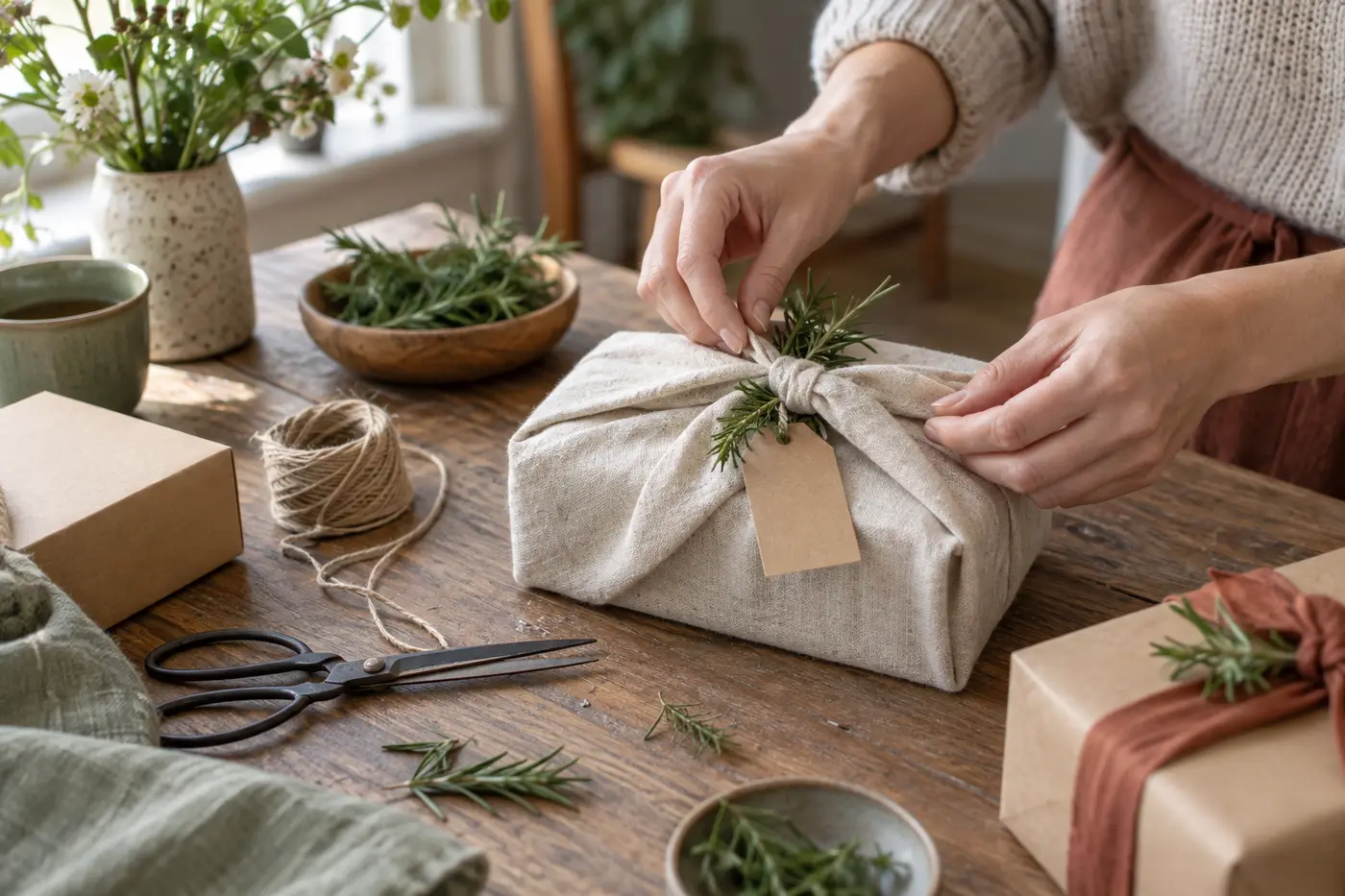
Wrapping creates anticipation, but it does not need layers of single-use material. The most memorable packages often rely on texture, restraint and one personal detail.
1. Use a scarf or tea towel
Fabric wraps soft and irregular shapes beautifully. A vintage scarf adds pattern; a useful tea towel suits a kitchen gift. Fold opposite corners over the object, tie the remaining corners and tuck in a small card. The wrap becomes a second usable present.
2. Save sturdy boxes
A clean shoe box or delivery box becomes refined when covered with plain paper or painted on the lid. Remove old labels, reinforce the base and add tissue saved from another purchase. A well-sized box protects custom or handmade items better than loose paper.
3. Turn paper bags inside out
Many shopping bags have a clean kraft interior. Open the seams, flatten the sheet and place printed branding on the inside. Creases add character rather than harming the result.
4. Reuse maps and sheet music
Outdated maps can connect to a destination, hometown or shared trip. Damaged books and surplus sheet music offer graphic texture, but do not cut materials with personal or collectible value. Choose pages headed for recycling.
5. Make the ribbon reusable
Cotton tape, twill ribbon and narrow fabric strips can be saved and used again. Tie a simple square knot rather than covering the package in tape. Neutral fabric looks considered against both plain and patterned paper.
6. Add one natural element
A rosemary sprig, dried leaf or small pine clipping brings shape and scent. Use clean, dry material and avoid berries or plants that may stain. For shipped gifts, a flat paper ornament is more durable.
7. Let the tag tell the story
Cut a tag from a cereal box or heavy paper, place the printed side inward and write a short reason for the gift. A sentence about the memory behind the object makes a simple package feel personal.
Choose materials for the journey
A package carried by hand can support a delicate sprig or loose fabric fold. A shipped parcel needs flatter decoration, secure internal padding and a clean outer box. Keep ribbon and raised ornaments away from the shipping surface so they do not catch in sorting equipment.
For food, scented items or natural foliage, confirm that nothing can leak, shed or transfer fragrance to the gift. A reusable cotton tie and paper tag are dependable when you do not know how long the package will travel.
Choose one base material, one tying material and one personal detail. That small visual system is enough. The gift stays protected, the presentation feels deliberate and fewer materials go straight to the bin.
About the editor
Pugac Editorial Desk creates practical guides about useful design, meaningful objects and the rituals that make giving feel personal.