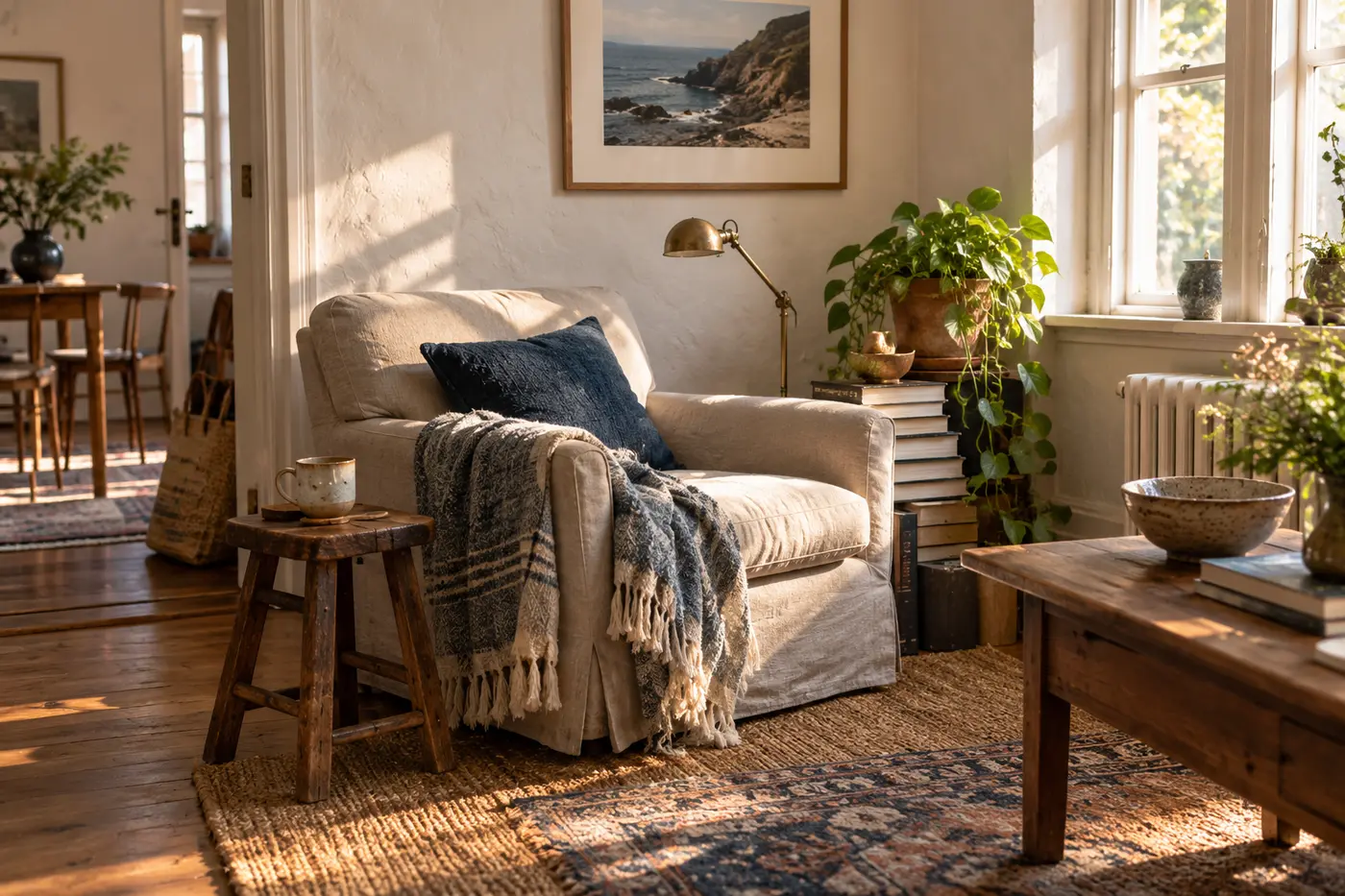
A new room can be finished and still feel anonymous. Personal character develops when the space reflects how you live: where you drop keys, which chair catches morning light and what you want to see at the end of the day.
Unpack meaningful objects first
Before buying décor, bring out photographs, books, textiles, pottery and inherited pieces you already value. These objects establish colors and materials that can guide later choices. They also make a new address feel connected to your earlier life.
Design around routines
Create a landing place near the door, a comfortable reading light, a tray for coffee supplies or hooks where bags naturally collect. When a home supports its residents, personality becomes visible through order and ease.
Layer the lighting
Overhead light alone flattens a room. Add a floor lamp near seating, a small lamp on a shelf and focused light for tasks. Warm pools of light create intimacy and allow favorite objects to be noticed.
Use textiles for softness
Curtains, rugs, cushions and throws absorb sound and introduce texture. Repeat one color in small amounts rather than buying a complete matching set. Variation gives the impression of a home built over time.
Put stories on the wall
Display a photograph, print, child’s drawing, map or textile that connects to a place or person. Start with one piece at the correct scale. The wall does not need to be full to feel intentional.
Leave a little space unfinished
Empty shelves and bare corners are not failures. They allow discoveries from future trips, gifts and local makers to enter naturally. Buying slowly also reveals which functions the home actually lacks.
Add evidence of life
A bowl of fruit, an open book, a basket for current projects and healthy plants give a room movement. The goal is not staged disorder. It is permission for useful things to remain accessible and beautiful.
Finish one daily zone first
Instead of spreading purchases across every room, complete the place you use most: a reading chair, breakfast corner, bedside table or entry landing zone. Add the correct light, a comfortable textile, useful storage and one meaningful object. A finished daily zone gives the home an emotional center while the rest develops.
Live with the layout for a week before buying more. Notice where light changes, where people naturally sit and which surfaces collect clutter. Those observations are more useful than a shopping list made on move-in day.
A personal home does not require a single style label. It needs continuity between the people, objects and daily actions inside it. Start with what matters, solve real routines and let the remaining layers arrive with time.
About the editor
Pugac Editorial Desk creates guides about lived-in interiors, meaningful objects and design decisions that support ordinary routines.